
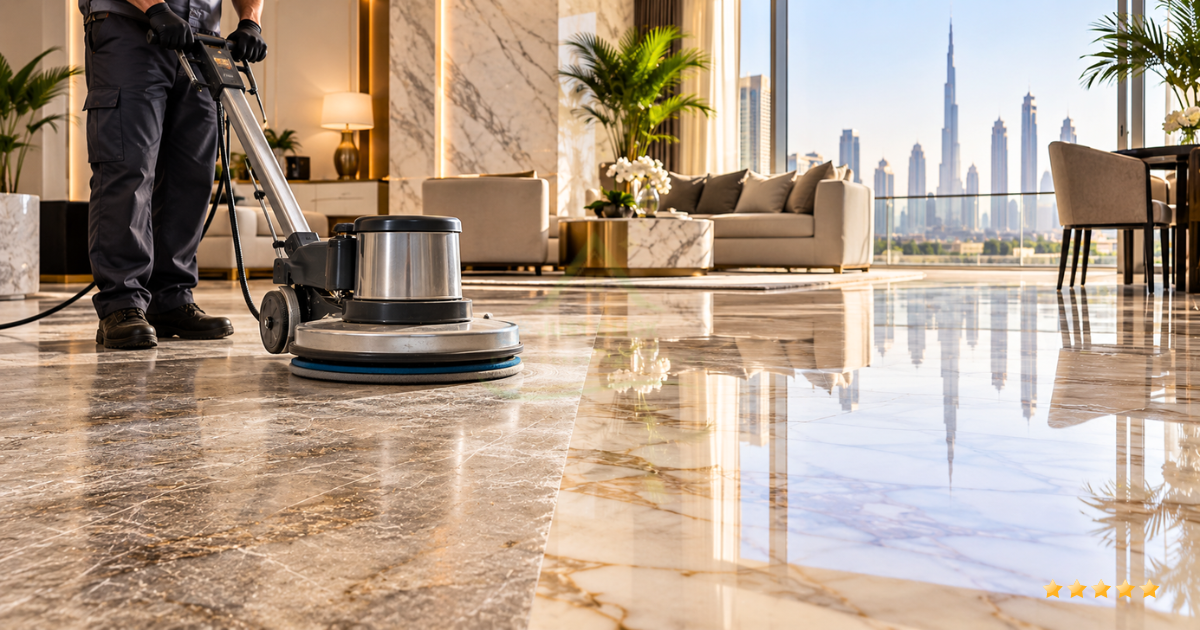
Marble has a way of making a home feel elegant without needing much decoration. Its natural patterns, smooth surface, and subtle shine can transform floors, countertops, staircases, walls, and other areas into standout features. But marble does not stay perfectly polished forever. With regular foot traffic, dust, spills, cleaning, furniture movement, and everyday use, the surface gradually changes. The glossy appearance can become dull, small scratches may appear, and areas with heavy traffic can start looking different from the rest of the floor.
This is where marble polishing becomes more than simply making a surface look shiny. There is actual science behind the process. Marble polishing involves carefully refining the stone’s surface using progressively finer abrasives and suitable techniques. The objective is to reduce visible surface imperfections and create a smoother, more reflective finish without unnecessarily removing large amounts of the natural stone. For homeowners in Dubai, understanding this process can make it easier to decide when marble needs polishing and what benefits can realistically be expected.
What Exactly Is Marble?
Before understanding polishing, it helps to understand the material itself. Marble is a natural stone formed when limestone undergoes heat and pressure over geological periods. Its main mineral component is generally calcite, although other minerals can contribute to its colour and distinctive veining. The crystals within marble interact with light. When the surface is smooth and properly refined, light can reflect more evenly from it, creating the familiar polished appearance.
That is why the condition of the surface matters so much. A scratched, rough, etched, or heavily worn surface scatters light differently. Instead of producing a consistent reflection, the imperfections interrupt the appearance of the finish. Marble polishing is essentially about refining that surface.
Why Does Marble Lose Its Shine?
A newly installed marble surface can have a beautiful natural finish, but daily use gradually affects it. Several things can contribute to the loss of shine.
- Foot Traffic: Every time someone walks across a marble floor, small particles of dust and grit can come into contact with the surface. Over time, repeated movement can contribute to fine surface wear. Areas near entrances, hallways, living rooms, and frequently used pathways usually experience more traffic than less-used parts of a home. This can create uneven-looking floors where some sections remain glossy while others appear dull.
- Dust and Fine Grit: Dubai’s dry environment means dust is an ongoing consideration for homeowners. Fine particles brought indoors through doors, footwear, balconies, and normal household activity can settle on floors. Some particles can be abrasive enough to contribute to surface wear when repeatedly walked over. Regular dust removal therefore plays an important role in protecting marble between polishing treatments.
- Spills and Acidic Substances: Marble is particularly sensitive to acidic substances because its calcite content can react with acids. Common household substances such as lemon juice, vinegar, and some acidic food or drink products can potentially cause etching if they remain on an unprotected marble surface. Etching is different from ordinary dirt. It is a change to the surface caused by a chemical reaction. Cleaning alone may not restore the original finish when etching has occurred.
- Incorrect Cleaning Products: Not every household cleaning product is suitable for natural stone. Strong acidic cleaners or abrasive products can affect marble surfaces and may leave them looking dull or damaged. Homeowners should follow the stone manufacturer’s care recommendations and choose products specifically suitable for marble or natural stone.
The Science Behind Marble Polishing
So what actually happens during polishing? At its simplest, polishing is a controlled process of surface refinement. The stone surface is worked using abrasives that gradually reduce scratches, marks, and microscopic irregularities. Coarser abrasives may be used when the surface has more significant damage, followed by progressively finer abrasives.
As the surface becomes smoother, it can reflect light more consistently. This is the scientific reason a polished marble surface appears glossy. It is not simply a layer of shine being painted onto the stone. The surface itself is being refined.
Polishing Is Different From Cleaning
This distinction is important for homeowners. Cleaning removes dirt, dust, spills, stains, and other unwanted material from the surface. Polishing addresses the condition and finish of the stone itself.
For example, if your marble floor looks dull because it is covered in dust, cleaning may be enough to improve its appearance.
But if the surface has become scratched, worn, etched, or unevenly finished, cleaning alone will not necessarily restore its original appearance. This is why marble maintenance sometimes requires more than routine household cleaning.
What Happens During the Polishing Process?
The exact process depends on the condition and type of marble, but a typical restoration process can involve several stages.
1. Surface Inspection: The first step is understanding what is wrong with the marble.
-
- Is it simply dirty?
- Does it have scratches?
- Are there areas affected by etching?
- Is the finish uneven?
- Are there stains or damaged sections?
A proper assessment helps determine the appropriate treatment.
2. Cleaning: The surface is cleaned to remove loose dirt, dust, grease, and other contaminants. Starting with a clean surface makes it easier to assess the actual condition of the stone.
3. Grinding or Surface Refinement: If the marble has deeper scratches, uneven areas, or significant wear, more intensive abrasive work may be necessary. Grinding uses coarser diamond abrasives to remove a small amount of stone and level the surface. This is not required for every polishing job. The treatment should be matched to the condition of the marble.
4. Honing: Honing uses finer abrasives to create a smoother, more uniform surface. A honed marble finish is generally less reflective than a highly polished finish, but it can provide a smooth and elegant appearance.
5. Polishing: Finer polishing abrasives are then used to refine the surface further. As microscopic irregularities are reduced, the surface becomes increasingly reflective.
6. Final Treatment: Depending on the marble and the desired result, additional treatments may be considered, including sealing. Sealing and polishing are not the same thing. A sealer is designed to provide a degree of protection against staining and moisture penetration. It does not replace the polishing process and does not create the same type of mechanical refinement.
Why Does Polished Marble Reflect Light Better?
This is one of the most interesting aspects of marble polishing. A rough surface contains countless microscopic peaks and valleys. Light hitting those irregularities is reflected in many different directions. The result looks relatively dull.
As polishing refines the surface, those irregularities are reduced. The surface becomes smoother, allowing light to reflect more consistently. That produces the characteristic glossy appearance associated with polished marble. The shine is therefore closely connected to surface smoothness and the way light interacts with the stone.
What Are the Benefits of Marble Polishing for Dubai Homes?
Regular maintenance and suitable polishing can offer several practical and visual benefits.
- A More Attractive Surface: The most obvious benefit is appearance. A properly polished marble floor can look brighter, cleaner, and more refined. Natural veining may also become more visually noticeable because the smoother surface reflects light more effectively.
- Restoring Dull Areas: High-traffic sections can become noticeably duller than areas that receive little use. A suitable polishing process can help improve the consistency of the finish across the surface.
- Improving Surface Smoothness: Depending on the condition of the stone and the treatment used, polishing can refine minor surface imperfections and leave the marble smoother to the touch.
- Maintaining Natural Beauty: Marble is valued partly because no two pieces have the same natural appearance. Regular care can preserve the visual character of the stone instead of allowing accumulated wear to dominate its appearance.
- Supporting Long-Term Maintenance: Polishing is not a replacement for everyday care, but periodic maintenance can form part of a broader marble-care strategy. Keeping the surface clean, dealing with spills promptly, using suitable cleaning products, and arranging appropriate restoration when required can all contribute to better long-term care.
Why Dubai Homes May Need Particular Attention
Dubai homes can experience conditions that make regular surface maintenance especially important. Dust is a constant part of the environment, and many homes have large tiled areas made from marble or other natural stone. Entrance areas can receive considerable foot traffic, while balconies, terraces, and large living spaces can introduce additional dust into the home.
Air conditioning also means residents spend substantial amounts of time indoors, making the appearance and maintenance of interior surfaces important to everyday living. This does not mean every Dubai home needs frequent polishing. Instead, homeowners should assess the actual condition of their marble and establish a maintenance routine appropriate for their household.
How Often Should Marble Be Polished?
There is no universal polishing schedule. A marble floor in a busy family home may experience considerably more wear than marble in a lightly used guest room.
Factors that can influence polishing frequency include:
- Amount of foot traffic
- Type of marble
- Location within the home
- Cleaning routine
- Presence of children or pets
- Exposure to dust and grit
- Frequency of spills
- Previous polishing
- Condition of the existing finish
Rather than polishing simply because a certain number of months have passed, look at the condition of the surface. If the marble has become noticeably dull, scratched, etched, or uneven in appearance, it may be time to have it assessed.
Marble Polishing Is Not the Same as Marble Replacement
A dull floor does not automatically mean the marble itself has reached the end of its useful life. Natural stone can often be restored when the underlying material remains in good condition. If the main issue is surface wear, scratches, etching, or loss of shine, restoration may be worth considering before replacing the stone.
Replacement can involve significant material, labour, removal, and installation costs. Of course, badly cracked, structurally damaged, or severely deteriorated marble may require a different solution. An assessment is therefore important before making a decision.
How to Choose Marble Polishing Services
If you are considering marble polishing services, do not choose a provider solely because the quoted price is low. Ask how the marble will be assessed, which polishing method will be used, what level of finish is expected, and whether the team has experience with your type of stone.
It is also useful to ask whether the quotation covers cleaning, polishing, stain treatment, grinding, honing, or sealing. These are separate processes and may not all be required for every floor. A clear explanation of the work is much more useful than a generic promise to make the marble “shine.”
What Should You Expect From a Marble Polishing Company?
When comparing a marble polishing company in Dubai, homeowners should look for clarity rather than complicated promises.
A suitable provider should be able to explain:
1. What is wrong with the marble?
A: You should understand whether the problem is dirt, scratches, etching, stains, wear, or simply a loss of surface finish.
2. What treatment is required?
A: Not every floor needs grinding or intensive restoration.
3. What finish can realistically be achieved?
A: The final appearance depends on the marble, its condition, previous treatments, and the polishing process.
4. How should the marble be maintained afterward?
Good aftercare is an important part of preserving the result.
Simple Ways to Protect Marble Between Polishing Treatments
You can reduce unnecessary wear by adopting a few simple habits.
- Use mats or rugs near entrances to reduce the amount of dust and grit reaching marble floors.
- Clean spills promptly, especially acidic liquids and foods.
- Use cleaning products designed for natural stone.
- Avoid harsh abrasive powders unless specifically recommended for your stone.
- Dust and clean floors regularly so fine particles do not remain underfoot.
- Use suitable furniture pads to reduce the risk of scratching when furniture is moved.
- Avoid dragging heavy furniture directly across marble.
These small measures can make a significant difference over time.
Does Polishing Remove Marble Completely?
No. The objective is controlled surface refinement, not removing large amounts of marble unnecessarily. More intensive grinding does remove a small amount of the stone, which is why the process should be performed according to the condition of the surface. For lightly worn marble, a less aggressive polishing approach may be sufficient. This is another reason why assessment matters before choosing a treatment.
The Difference Between Shine and Health of the Stone
A shiny marble floor may look impressive, but appearance should not be the only consideration. The stone should also be maintained appropriately. Over-polishing or using unsuitable chemicals can create problems rather than solve them. The goal should be to achieve an attractive finish while respecting the characteristics of the natural stone. Good marble care is therefore about balance. Clean when necessary. Polish when the surface requires it. Protect the stone where appropriate. Avoid unnecessary treatments.
Final Thoughts
There is real science behind the shine of polished marble. The process works by refining the stone’s surface and reducing microscopic irregularities so that light can reflect more consistently. Depending on the condition of the marble, the work may involve cleaning, grinding, honing, polishing, and potentially sealing as separate stages.
For Dubai homeowners, regular attention is particularly useful because dust, foot traffic, spills, and everyday use can gradually affect marble surfaces. The good news is that a dull marble floor does not necessarily mean the stone needs to be replaced. In many situations, appropriate restoration and polishing can improve its appearance and bring back much of the finish that has been lost through everyday wear. The most important step is understanding what your marble actually needs.
If the surface is simply dirty, clean it. If it has scratches or etching, it may need more specialised treatment. If the finish has become dull through normal wear, polishing may be appropriate. With the right care and a sensible maintenance routine, marble can continue to be one of the most attractive features of a Dubai home for many years. For homeowners considering marble restoration, Just Click Deep Cleaning Services offers marble care solutions designed around the condition and requirements of the surface.
FAQs
1. What is the science behind marble polishing?
Marble polishing uses progressively finer abrasives to refine the stone’s surface. As microscopic scratches and irregularities are reduced, light reflects more consistently, creating a smoother and more reflective finish.
2. How often should marble be polished in a Dubai home?
There is no fixed schedule. The appropriate frequency depends on foot traffic, marble type, cleaning habits, dust exposure, and the condition of the surface. Polishing should generally be considered when the finish becomes noticeably dull or worn.
3. Does marble polishing remove scratches?
It can improve or remove some surface scratches depending on their depth. Deeper scratches may require grinding or other restoration work before the final polishing stage.
4. Is marble polishing the same as marble sealing?
No. Polishing refines the surface to improve its finish and reflectivity. Sealing is a separate treatment intended to provide additional protection against staining and moisture penetration where appropriate.
5. Can I maintain polished marble without frequent professional cleaning?
Yes. Regular dust removal, prompt spill cleanup, suitable stone-safe cleaning products, entrance mats, and careful furniture movement can all reduce unnecessary wear between polishing treatments.