
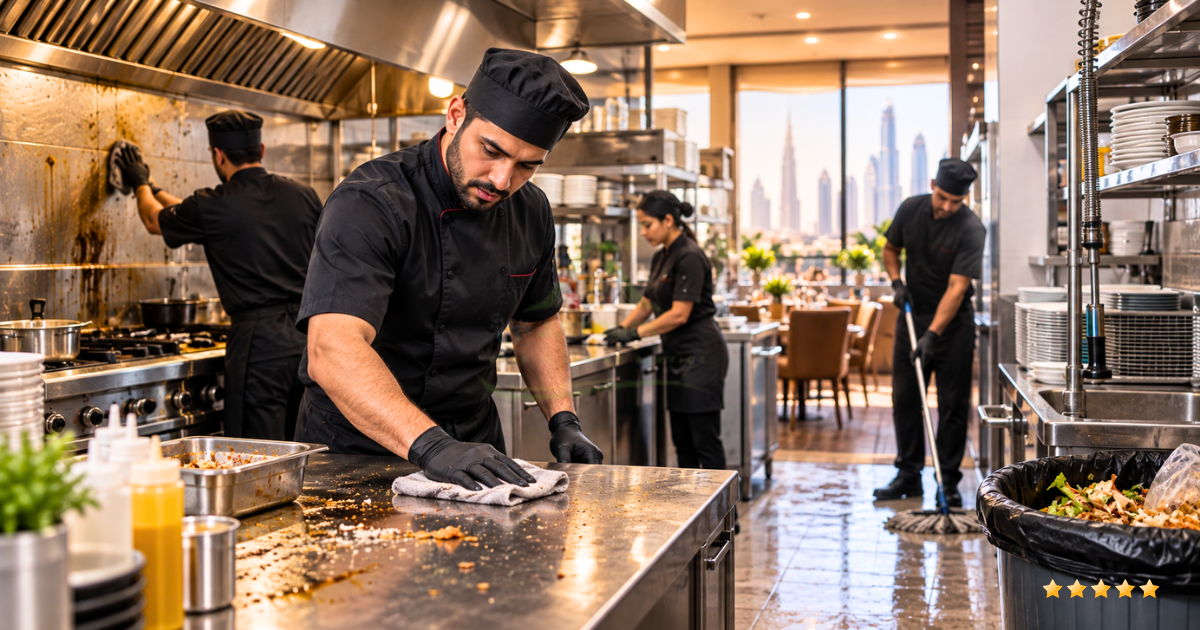
A restaurant can look spotless at the end of the day and still have hygiene problems hiding in places customers rarely see. Dining tables may be wiped, floors may be mopped, and kitchen surfaces may look clean. But daily cleaning is not only about making a restaurant look presentable. It is about removing food residues, managing grease, preventing cross-contamination, maintaining equipment, and keeping frequently touched areas under control.
This is especially important in Dubai, where restaurants operate in busy food-service environments, and kitchens can experience high temperatures, heavy workloads, and continuous cooking activity. The problem is that cleaning mistakes are often caused by routine. Staff members repeat the same process every day without checking whether it is actually removing the right type of dirt from the right places. A restaurant may therefore need to look beyond its basic closing routine and identify where its cleaning process is falling short.
Here are some of the most common hygiene mistakes restaurants make during daily cleaning and what they can do differently.
1. Treating Visible Cleanliness as Complete Cleanliness
One of the biggest mistakes is assuming that a surface is hygienic simply because it looks clean. A counter may have no visible crumbs but still have food residue or grease. A floor can look dry while retaining dirt around corners. A refrigerator handle can appear clean despite being touched repeatedly throughout the day.
Visual inspection is useful, but it should not be the only measure of cleaning quality. Restaurant teams should pay attention to both visible and less obvious areas. Cleaning routines need to consider where food particles, grease, moisture, and frequent contact are most likely to accumulate. This is especially important in kitchens where surfaces are constantly exposed to food preparation.
2. Using the Same Cloth for Multiple Areas
A cleaning cloth that has been used on one surface should not automatically be used on another. Using the same cloth across food preparation counters, dining tables, equipment, handles, and other areas can spread dirt rather than remove it. This is a simple mistake, but it can undermine an otherwise organised cleaning routine.
Restaurants should establish clear practices for cleaning materials. Cloths, brushes, and other tools should be used appropriately, cleaned or replaced as required, and kept in suitable conditions between uses. The objective should always be to move from dirty areas to cleaner areas without transferring contamination along the way.
3. Forgetting High-Touch Surfaces
Restaurant employees naturally focus on areas where food is prepared, but frequently touched surfaces also deserve attention.
Think about how many times people touch:
- Door handles
- Refrigerator handles
- Light switches
- Drawer handles
- Equipment controls
- Payment areas
- Counter edges
- Bathroom fixtures
- Chair backs
- Service stations
These surfaces can be overlooked because they do not usually appear dirty. A good daily cleaning routine should identify high-touch points throughout the restaurant and include them consistently rather than relying on occasional cleaning.
4. Mopping Floors Without Cleaning the Edges
Floors receive considerable attention in most restaurants, but the cleaning process can still be incomplete. Staff may quickly mop the main walking areas while leaving dirt around walls, underneath equipment, behind bins, or in corners. Grease and food particles can gradually accumulate in these less accessible areas.
Instead of simply asking whether the floor was mopped, restaurant managers should consider whether the entire floor area was properly addressed. Areas beneath counters, around cooking equipment, near sinks, and beside storage units may require additional attention.
5. Ignoring Grease Until It Becomes a Major Problem
Grease is a normal part of commercial cooking, but allowing it to build up makes cleaning progressively harder. Small amounts of grease can accumulate on surfaces around cooking equipment, ventilation areas, walls, floors, and other parts of the kitchen. When cleaning is rushed, staff may wipe only the most visible areas while leaving behind a thin layer of residue.
Over time, that residue can become sticky and difficult to remove. Daily cleaning should therefore address grease according to the type of surface and equipment involved. Periodic kitchen deep cleaning Dubai services can also be useful when accumulated grease and residue require more extensive attention than routine cleaning can provide.
6. Cleaning Equipment Without Reaching Its Hidden Areas
Kitchen equipment is often cleaned from the outside while the less visible components receive less attention. Handles, corners, seals, underneath sections, removable parts, and areas around joints can collect food residue and grease. This is particularly easy to miss when employees are working under time pressure.
Cleaning instructions should identify the areas that require attention for each major piece of equipment. It is also important to follow manufacturer recommendations for equipment that has specific cleaning requirements. A quick wipe may make equipment look clean without actually dealing with buildup in difficult-to-reach locations.
7. Neglecting Refrigerator Seals and Shelves
Refrigeration areas can be overlooked because they are enclosed and not part of the dining area. However, food storage spaces need regular attention. Small spills can remain on shelves, containers can leave residue, and door seals can collect dirt over time. If these areas are ignored, the refrigerator may gradually become harder to maintain. Restaurants should include shelves, handles, seals, drawers, and other accessible areas in their cleaning routine while following appropriate food-storage and equipment-care procedures.
8. Cleaning Around Food Without Protecting Food Properly
Cleaning and food preparation can sometimes happen within the same busy environment. If cleaning products are used carelessly around ingredients, utensils, or food-contact surfaces, the cleaning process itself can create a problem. Staff should understand which products are appropriate for specific surfaces and how they should be used.
Food and ingredients should be protected or moved away from cleaning activity where necessary, and surfaces that come into contact with food should be handled according to appropriate cleaning and sanitising procedures. A cleaning product should never be selected simply because it smells strong or appears powerful. The right product and correct application matter more than the strength of the smell.
9. Confusing Cleaning With Sanitising
Cleaning and sanitising are related, but they are not necessarily the same step. Cleaning focuses on removing dirt, grease, food particles, and other visible or physical residues. Sanitising is intended to reduce microorganisms on suitable surfaces to an appropriate level. If a surface is covered with grease or food residue, simply applying a sanitising product may not achieve the intended result. Restaurants should understand the purpose of each stage and follow the instructions for the products being used. This is one area where staff training can make a significant difference.
10. Rushing the End-of-Day Cleaning
Closing time can be one of the busiest moments for restaurant employees. After a long shift, staff may want to finish quickly. Floors get mopped, surfaces get wiped, bins are emptied, and everyone leaves. The problem is that rushed cleaning often becomes selective cleaning.
Employees may focus on the easiest areas while skipping difficult corners, equipment parts, storage spaces, or surfaces that require more time. A written closing checklist can help prevent this. Instead of relying entirely on memory, the team can work through specific areas and responsibilities before the restaurant is closed.
11. Forgetting the Cleaning Tools Themselves
There is an important question that many restaurants overlook:
Are the cleaning tools actually clean?
Mops, brushes, buckets, cloths, sponges, and other reusable items can collect dirt and moisture.
If they are stored while damp or not cleaned properly after use, they may become a poor part of the hygiene routine rather than a helpful one. Cleaning equipment should therefore have its own maintenance process.
After use, appropriate tools should be cleaned, handled correctly, and stored in a way that allows them to dry properly.
12. Leaving Wet Areas Without Proper Attention
Moisture can become a problem when it is left in areas that are difficult to dry. Sinks, floor drains, corners, cleaning areas, and spaces around equipment can remain damp after cleaning. Restaurants should pay attention to these areas and ensure that water is managed appropriately. This is particularly relevant in busy kitchens where water is used frequently throughout the day. The goal is not simply to wash an area but to leave it in a suitable condition after cleaning.
13. Neglecting Drains and Hard-to-Reach Areas
Drains are easy to ignore because they are not visible to customers. However, food particles, grease, and other residues can accumulate around drainage areas. Similarly, spaces behind equipment and underneath fixed units may not receive enough attention during routine cleaning. These areas should be included in a restaurant’s broader hygiene plan rather than being cleaned only when a problem becomes obvious. This is where scheduled kitchen deep cleaning services can complement daily maintenance by addressing areas that require more detailed attention.
14. Cleaning Only When Something Looks Dirty
A reactive cleaning approach can create unnecessary problems. If employees clean a surface only when they see dirt, some areas may go unnoticed for long periods. Restaurants need routine cleaning schedules based on usage and risk rather than appearance alone. For example, a frequently touched handle may need regular attention even when it looks clean, while a less-used storage area may follow a different schedule. The best cleaning plans are therefore structured around the way the restaurant actually operates.
15. Not Having a Clear Cleaning Responsibility
Another common mistake is assuming that someone else has cleaned an area. When responsibilities are unclear, certain tasks can easily be missed.
A restaurant should make it clear:
- Who cleans each area?
- When the task should be completed
- Which cleaning method should be used?
- Which products are appropriate
- How the task should be checked
- What happens if the area needs additional attention
Clear responsibility makes the cleaning process more consistent.
Daily Cleaning and Deep Cleaning Are Not the Same
A strong restaurant hygiene routine needs both regular maintenance and deeper cleaning. Daily cleaning deals with the immediate demands of restaurant operations. It keeps commonly used surfaces, floors, equipment, and customer areas under control. Deep cleaning goes further.
Restaurant deep cleaning can focus on accumulated grease, difficult-to-reach areas, equipment surroundings, walls, floors, storage spaces, and other areas that may not receive sufficient attention during a normal closing routine. This does not mean deep cleaning replaces daily cleaning. Instead, the two should work together. Daily cleaning maintains the restaurant from one shift to the next, while scheduled restaurant deep cleaning services can address the buildup that develops over a longer period.
When Should a Restaurant Consider Deep Cleaning?
There is no single schedule that works for every restaurant. A small café with limited cooking may have different cleaning requirements from a busy commercial kitchen serving hundreds of meals.
Factors that can influence the frequency include:
- Kitchen workload
- Cooking methods
- Amount of grease produced
- Restaurant size
- Number of staff
- Customer volume
- Equipment type
- Food preparation activities
- Previous cleaning condition
A restaurant should consider a deeper cleaning when grease buildup becomes noticeable, difficult areas are being skipped, odours develop, equipment surroundings become dirty, or routine cleaning is no longer keeping the environment under control.
How Restaurant Managers Can Improve Daily Cleaning
Improving hygiene does not always require making the cleaning process complicated. Start with the basics. Create a clear checklist for opening and closing tasks. Divide responsibilities between staff members. Identify high-touch areas. Use appropriate cleaning materials for different zones. Check difficult-to-reach areas regularly. Keep cleaning equipment itself in good condition. Most importantly, do not judge the quality of cleaning only by how the restaurant looks at closing time. A clean restaurant should also have a cleaning process that is consistent, organised, and suitable for the way the kitchen operates.
Final Thoughts
Daily restaurant cleaning is essential, but simply completing a list of routine tasks does not automatically mean every hygiene issue has been addressed. Using the same cloth across different areas, overlooking high-touch surfaces, rushing closing duties, ignoring grease buildup, cleaning only what is visible, and forgetting difficult areas are all mistakes that can weaken an otherwise good cleaning routine. Dubai restaurants operate in demanding conditions, making consistency particularly important.
The most effective approach is to combine disciplined daily cleaning with scheduled deep cleaning when accumulated dirt, grease, and hard-to-reach areas require more attention. For businesses that need additional support, Just Click Deep Cleaning Services provides cleaning solutions designed to help restaurants maintain cleaner and more manageable environments. A restaurant does not need to wait until its kitchen looks heavily soiled before taking action. Good hygiene is built through small cleaning decisions made correctly every day, supported by deeper cleaning when routine maintenance is no longer enough.
FAQs
1. Why is daily cleaning important for restaurants?
Daily cleaning helps control food residues, grease, dirt, and buildup created during normal restaurant operations. It also helps keep frequently used areas and equipment in a cleaner condition between deeper cleaning sessions.
2. What is the difference between restaurant deep cleaning and daily cleaning?
Daily cleaning focuses on routine maintenance of commonly used areas, while deep cleaning involves more detailed attention to accumulated dirt, grease, difficult-to-reach spaces, equipment surroundings, and other areas that may be missed during normal cleaning.
3. How often should a restaurant arrange deep cleaning?
The ideal frequency depends on the restaurant’s size, cooking activity, customer volume, grease production, and overall condition. Busy kitchens may require deeper cleaning more frequently than smaller food-service businesses.
4. What areas are commonly missed during restaurant cleaning?
Corners, areas underneath equipment, refrigerator seals, drains, equipment controls, storage spaces, wall sections, door handles, and other difficult-to-reach or frequently touched surfaces are often overlooked.
5. Can daily cleaning completely replace kitchen deep cleaning services?
Not usually. Daily cleaning is essential for ongoing maintenance, but it may not be enough to remove accumulated grease and dirt from difficult areas. Scheduled deep cleaning can complement the restaurant’s regular cleaning routine.